Quick Answer: What is a solar AC?
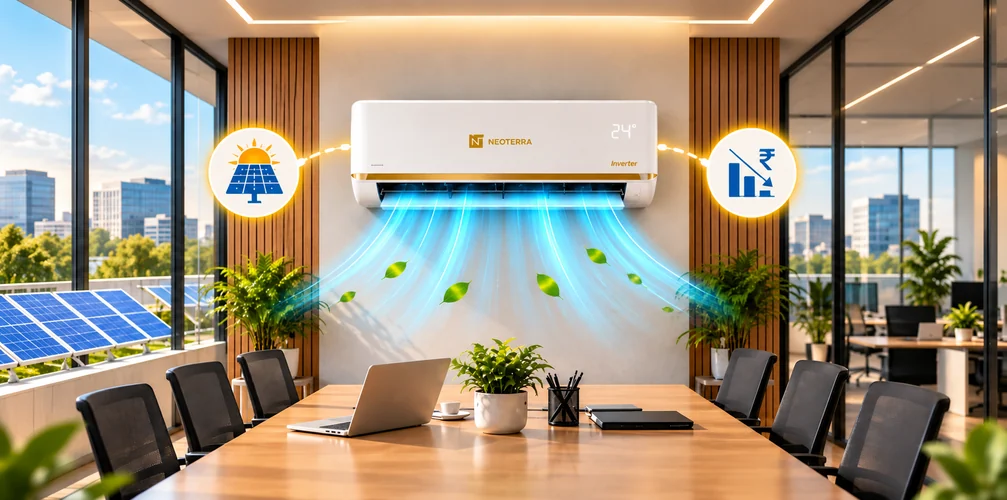
A solar AC is an air conditioner designed to use electricity generated from solar energy, reducing its dependence on electricity from the conventional power grid. Depending on the system design, a solar AC can use solar power during the day and may also use grid electricity when solar generation is insufficient.
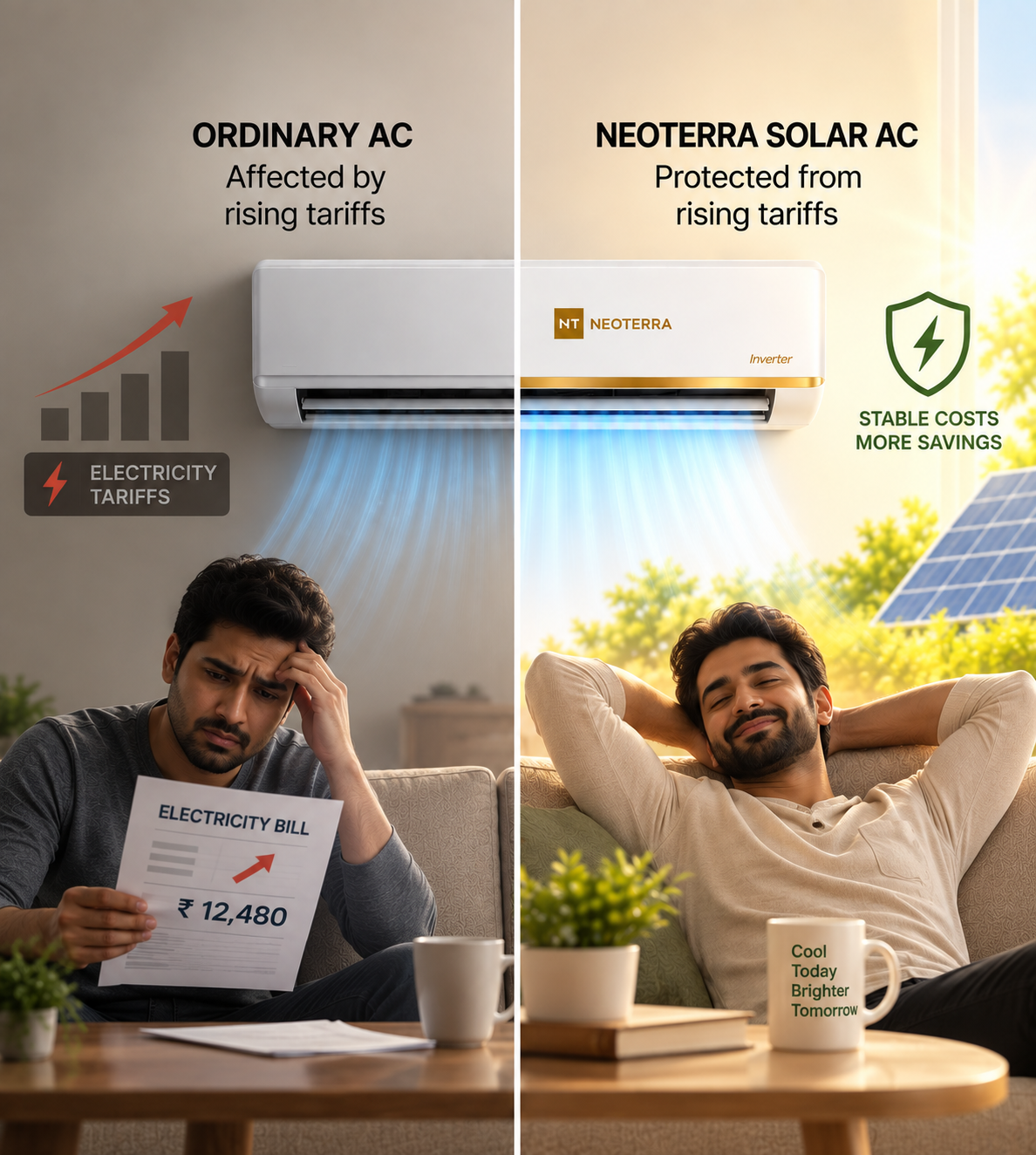
Unlike a conventional AC that primarily draws electricity from the grid, a solar AC combines cooling technology with solar energy to potentially reduce operating costs and make cooling more energy-conscious.
How Does a Solar AC Work?
A solar AC system generally brings together three components:
- Solar panels generate electricity from sunlight.
- The solar-compatible AC system uses available solar electricity to operate the compressor and other components required for cooling.
- The electricity grid can supplement the system when solar power isn’t sufficient, depending on the configuration.
In simple terms:
Sunlight → Solar Energy → AC → Cooling
When solar generation is available, part or all of the AC’s electricity requirement can be supplied by solar energy rather than purchased electricity from the grid.
This is particularly relevant in India because the strongest sunlight often coincides with the hours when cooling demand is high.
Does a Solar AC Work Only When the Sun Is Shining?
Not necessarily.
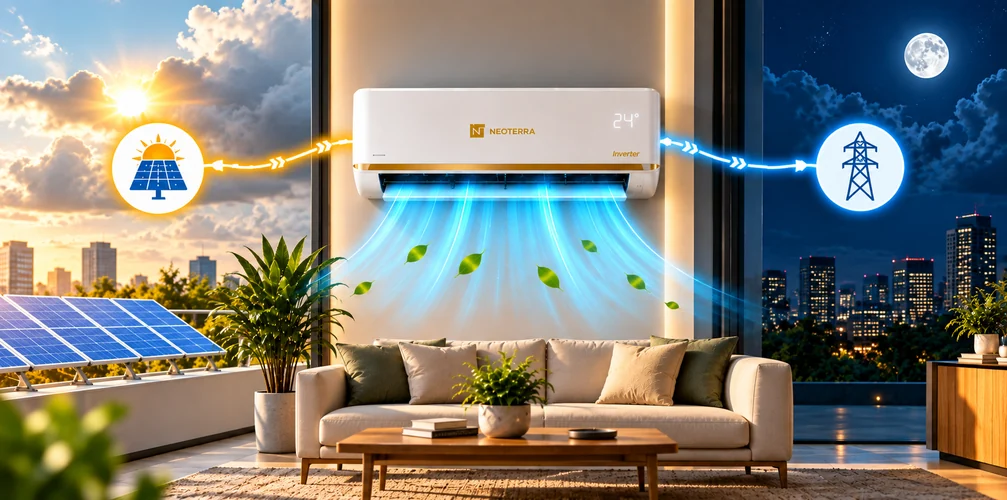
A solar AC system can be designed to work with different power configurations. Some systems can combine solar generation with grid electricity, allowing the AC to continue operating when solar generation falls.
The exact operating behaviour depends on the solar AC’s architecture and whether the system includes components such as grid integration or energy storage.
This is why buyers should look beyond the label “solar AC” and understand how the particular system manages solar, grid and stored energy.
Can a Solar AC Work at Night?
Yes, depending on the system configuration.
Solar panels do not generate meaningful electricity from sunlight at night. However, a solar AC can still operate if the system is designed to use another electricity source, such as the grid or an energy-storage system.
For a buyer, the important question isn’t simply:
“Can solar AC work at night?”
It is:
“How does this particular solar AC manage power when solar generation is unavailable?”
That distinction matters when comparing different solar cooling solutions.
Does a Solar AC Need Batteries?
Not always.
Whether batteries are required depends on the solar AC system architecture.
A system designed to use solar power during the day and grid electricity when necessary may not require battery storage. Other systems can incorporate batteries to store energy for later use.
Avoid assuming that every solar AC installation needs a large battery bank. The appropriate configuration depends on the product, installation environment, usage pattern and desired level of energy independence.
How Much Electricity Can a Solar AC Save?
The answer depends on several factors:
- AC capacity
- Daily operating hours
- Outdoor temperature
- Set temperature
- Solar generation
- Solar panel capacity
- Electricity tariff
- Location
- System efficiency
- Whether the AC operates primarily during daylight hours
A simple way to think about potential savings is:
Electricity cost avoided = Solar electricity used × Applicable electricity tariff
For example, if solar generation supplies a portion of the electricity required by an AC, that portion does not have to be purchased from the grid.
Actual savings therefore need to be calculated using the specific AC, solar system, usage pattern and electricity tariff rather than a universal percentage.
Solar AC vs Conventional AC
A conventional AC is primarily designed around grid electricity.
A solar AC adds solar energy into the cooling equation.
| Factor | Solar AC | Conventional AC |
|---|---|---|
| Primary energy source | Solar + potentially grid | Grid |
| Solar integration | Designed around solar use | Usually separate |
| Grid dependence | Can be reduced | Generally higher |
| Daytime solar benefit | Potentially significant | Depends on separate solar setup |
| Upfront investment | Can be higher | Generally lower |
| Long-term operating economics | Potentially lower | Depends on electricity consumption |
| Sustainability potential | Higher | Lower unless paired with renewable energy |
The right choice depends on how much you use your AC, when you use it and your electricity costs.
What Are the Main Benefits of Solar AC?
1. Potentially lower electricity bills
Using solar energy for cooling can reduce the amount of electricity purchased from the grid.
2. Better use of daytime solar generation
Cooling demand is often high during sunny hours, creating a natural opportunity to use solar energy directly for AC operation.
3. Reduced dependence on grid electricity
Solar generation can offset a portion of the energy normally purchased from the grid.
4. Lower long-term operating costs
Although the initial investment can be higher, the economics can improve over time as solar energy reduces recurring electricity expenses.
5. More sustainable cooling
Solar energy provides a renewable source of electricity for one of the most energy-intensive appliances in many homes and commercial spaces.
What Is Neoterra Solar AC?
Neoterra is building climate-focused cooling solutions designed around a simple idea:
Cooling should not have to mean continuously increasing electricity costs.
Neoterra Solar AC combines air-conditioning with solar energy to create a more energy-conscious approach to cooling.
The proposition is particularly relevant for users who operate air conditioners for long periods and want to reduce recurring electricity expenditure.
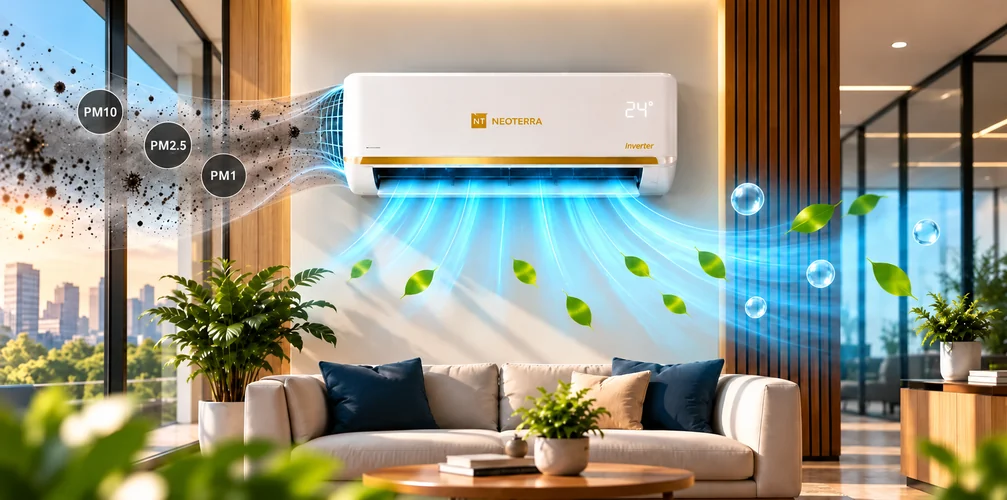
Neoterra also focuses on indoor air quality, including filtration designed to address fine particulate matter, making the product proposition about more than just cooling.
Who Should Consider a Solar AC?
Solar AC can be particularly relevant for:
- Independent homes
- Villas
- Shops
- Offices
- Clinics
- Coaching institutes
- Schools
- Small commercial spaces
- Businesses with high daytime cooling requirements
- Users already investing in rooftop solar
The strongest economic case is generally created when there is high AC usage + strong solar availability + meaningful electricity tariffs.
Is Solar AC Worth It?
For a buyer who uses air conditioning regularly, solar AC can be worth evaluating because the purchase decision isn’t only about the initial price.
The better question is:
How much will the system cost me over its entire operating life?
That means comparing:
Purchase cost + installation + electricity + maintenance
rather than looking only at the upfront AC price.
For a detailed breakdown, see our guide to [solar AC cost and ROI].
Frequently Asked Questions
What is a solar AC?
A solar AC is an air conditioner that can use electricity generated from solar energy, reducing dependence on grid electricity.
Does solar AC work at night?
Yes, depending on its configuration. Solar panels don’t generate meaningful power at night, so the system may use grid electricity or stored energy.
Does solar AC need batteries?
Not necessarily. Battery requirements depend on the system architecture and desired energy-storage capability.
Is solar AC better than inverter AC?
They solve slightly different problems. An inverter AC focuses on efficient compressor operation, while a solar AC incorporates solar energy into the power supply. Some solar AC systems may also use inverter technology.
How much does solar AC save?
Savings depend on solar generation, AC usage, electricity tariffs, capacity and operating conditions. There is no single percentage that applies to every installation.
Is solar AC good for India?
India’s strong solar availability and increasing cooling demand make solar-powered cooling an increasingly relevant solution, particularly for users with high daytime AC consumption.
Final Takeaway
A solar AC is more than an AC with solar panels attached to it. It is an approach to cooling that combines air conditioning, solar energy and long-term energy economics.
For consumers and businesses facing increasing cooling requirements, the important question is no longer just:
“Which AC should I buy?”
It is:
“How can I cool efficiently without making my electricity bill unnecessarily high?”
That is the problem Neoterra is working to solve.
Explore Neoterra Solar AC and discover a smarter approach to cooling.